
Sri Jeevan Nagar: Rebuilding Lives After the Partition
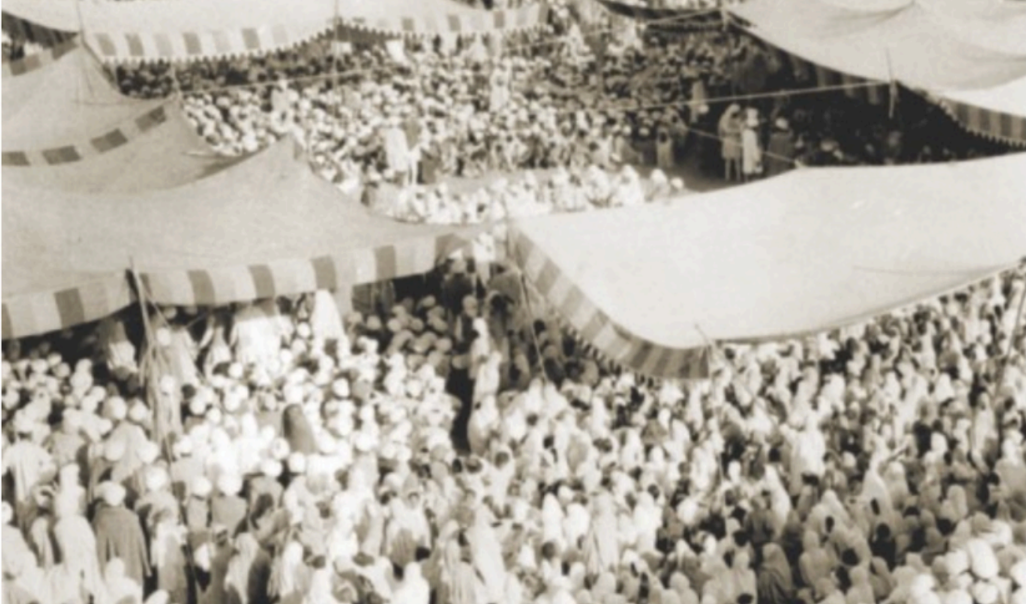
Image / A Saga Of Sri Satguru Jagjit Singh Ji
The Partition of India in 1947 was one of the most devastating events in South Asian history. The division of land led to the division of families, homes, and communities. Millions were displaced as violence and horror swept across the region. Yet even amid such tragedy, stories of unity and humanity emerged. One such story is that of the Namdhari Sikhs and the formation of Sri Jeevan Nagar.
Long before the Partition, the Namdhari Sikh community had become known for its commitment to non-violent resistance and social reform. At the heart of the Namdhari Sikh tradition is a belief in the dignity of all life, alongside a commitment to compassion, service, and freedom.
As political tensions intensified in the years leading up to the Partition, anxiety began to spread across Punjab. Sri Satguru Pratap Singh Ji, spiritual and community leader of the Namdhari Sikhs, began encouraging people to relocate and seek safety.
These warnings were not limited to members of the Namdhari community. People of all faiths and backgrounds were advised to take precautions and prepare for the challenges that lay ahead. In the year preceding the Partition, Sri Satguru Pratap Singh Ji purchased land in Sirsa, present-day Haryana. This land would become a place of refuge, a centre of rebuilding, and a home for many families: Sri Jeevan Nagar. Those who heeded the warnings and left before tensions escalated were able to reach safely. For many who travelled later, however, the journey came at a far greater cost.
As the Partition unfolded, millions across the newly drawn borders were forced to leave their homes. Many believed they would be able to remain where they were, only to find themselves caught up in one of the largest migrations in human history. Families set out carrying only what they could manage, facing an uncertain future and leaving behind lives they had spent generations building. Violence was widespread. Families were torn apart, women and girls were particularly vulnerable to assault, and many never completed the journey they had set out to make. Many who survived the journey arrived exhausted, traumatised, and haunted by all they had witnessed. At a time when humanity was being tested, Sri Satguru Pratap Singh Ji held firmly to the principle that all those crossing the border should be able to do so safely and without harm.
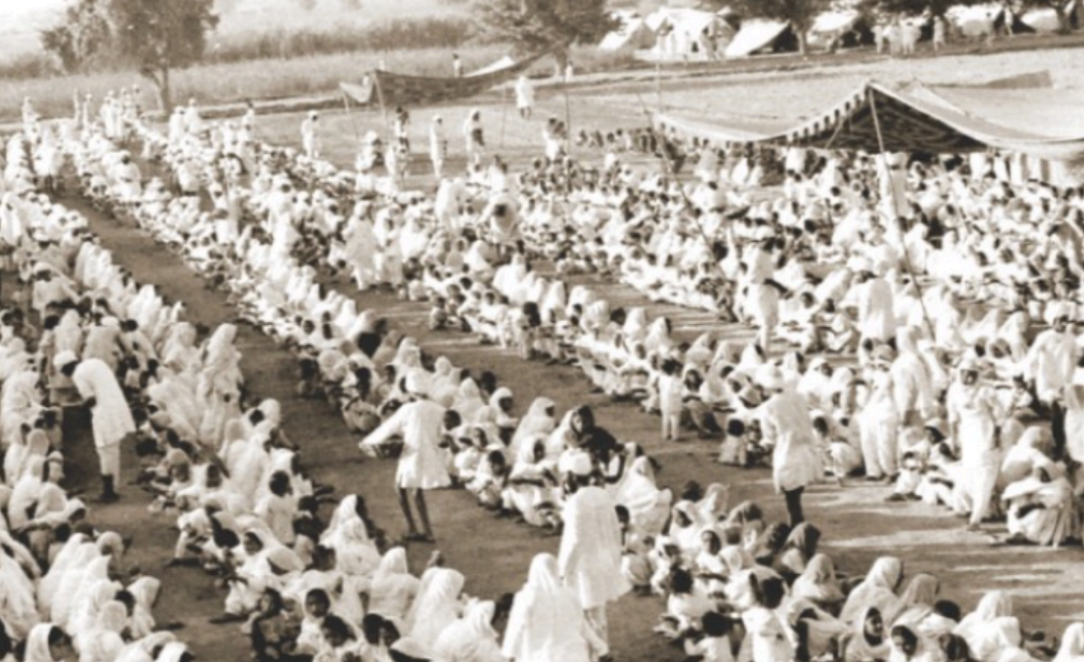
Image / A Saga Of Sri Satguru Jagjit Singh Ji
In keeping with this principle, he repeatedly sent Namdhari volunteers into areas engulfed by the upheaval, retracing the same dangerous routes that others were desperately trying to escape. Among those who took part in these efforts was Sri Satguru Jagjit Singh Ji, son of Sri Satguru Pratap Singh Ji. He was not merely an observer of these events, but stood alongside vulnerable families, accompanying and safeguarding them through some of the most perilous stages of their journey. For Sri Satguru Pratap Singh Ji and Sri Satguru Jagjit Singh Ji, many of the families seeking safety were familiar faces. They were people they had known for years, people they had watched grow up, people for whom they had wished long and happy lives, and whose lives had now been irrevocably changed by the events of the Partition. As families began arriving in Sri Jeevan Nagar, they found themselves far from the homes and communities they had once known.
The land that greeted them was dry, undeveloped, and unfamiliar. Yet after months of upheaval and uncertainty, it also offered something many had not known for some time: safety. Sri Jeevan Nagar was never intended to be merely a place of refuge. While safety was important, the vision extended far beyond providing shelter. Families were given the opportunity to rebuild their lives through their own efforts, restoring not only their livelihoods but also a sense of purpose and dignity. Land was made available for cultivation, cattle were provided for rearing, and employment was created through initiatives such as brick kilns and construction projects.
Rather than remaining dependent on aid, families were encouraged and supported in establishing sustainable livelihoods for themselves. Over time, Sri Jeevan Nagar began to take shape. As families settled and livelihoods became established, homes were built, roads laid, and community facilities developed, often in challenging conditions. Gradually, the undeveloped landscape was transformed into a place people could call home. What had begun as a place of refuge grew into a vibrant and flourishing community, a place where people could once again put down roots, creating a future for the generations that came after them.
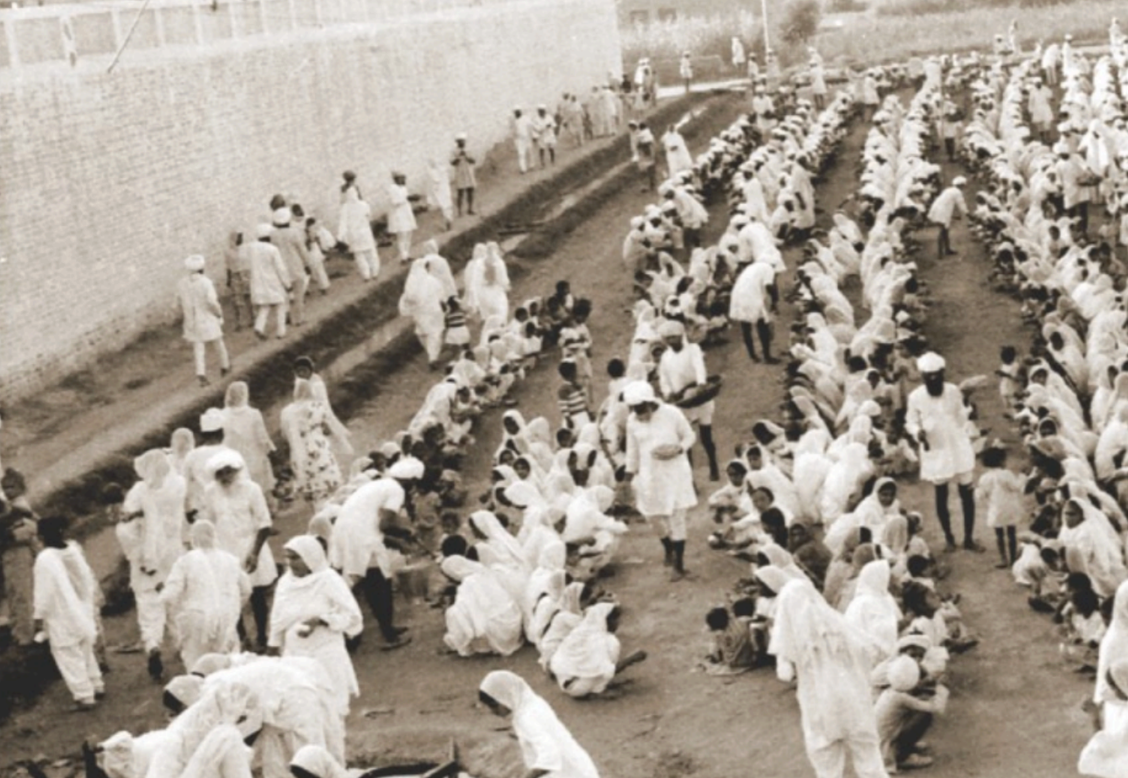
Image / A Saga Of Sri Satguru Jagjit Singh Ji
More than seven decades later, Sri Jeevan Nagar remains a testament to the resilience of those who endured the Partition and the vision of those who helped them rebuild. Its continued existence stands as a lasting reminder of what can be achieved when compassion is matched by action.