
Eating the Archive: Food, Memory & the Making of Delhi
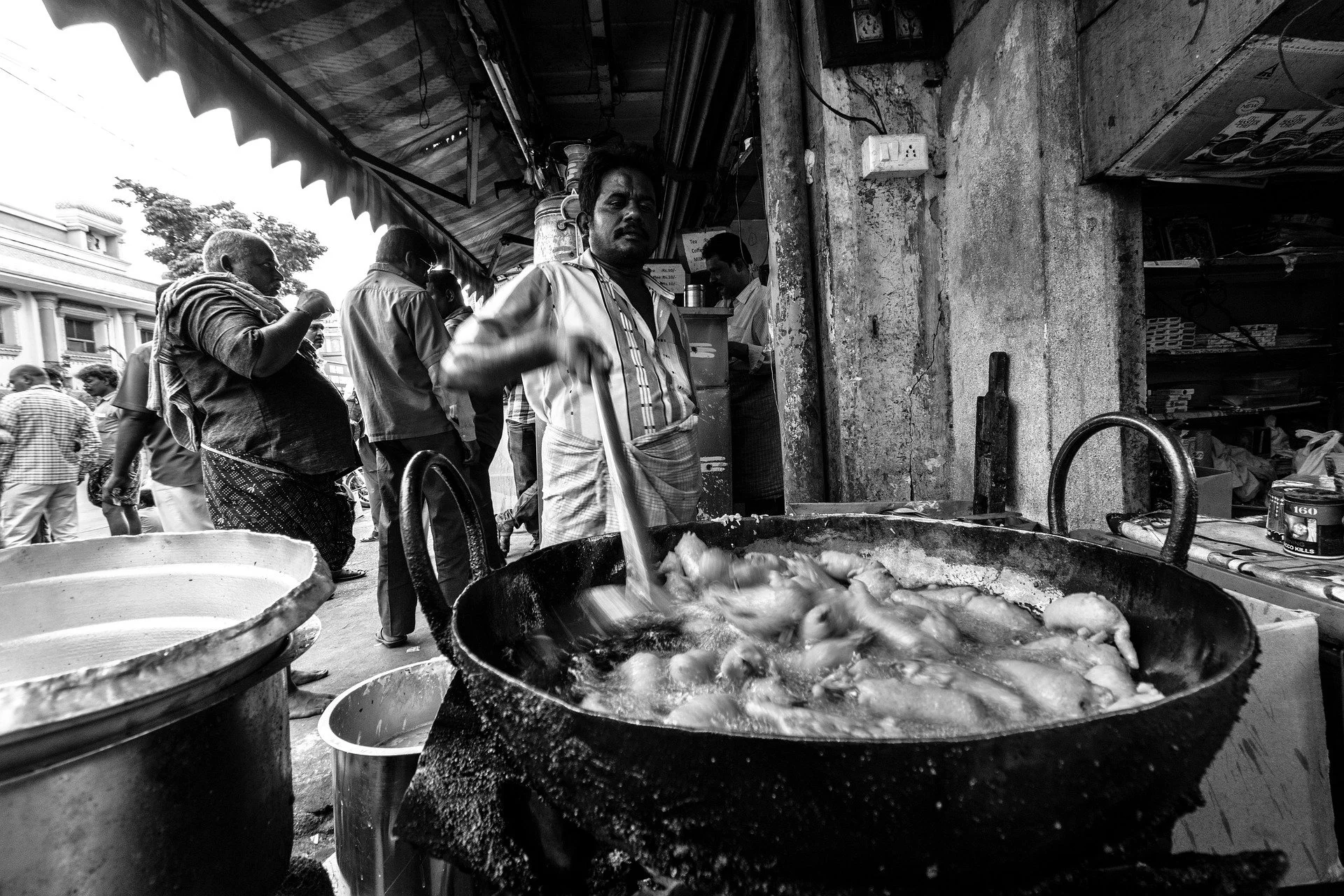
Delhi exists in imagination as much as it does in place. For many, it is a love story unfolding in colonial-era lanes and narrow gullies, alive with barking dogs, children playing gully cricket with makeshift bats, and the rhythms of everyday life. For others, it is legacy, a city that saw invasion, occupation and a resistance that brewed over chai. It is a city that has been reproduced and stylised on the silver screen as loud, chaotic and often errant. As Delhi’s rhythms spill into everyday life and popular imagination, the city is not just celebrated but remembered. However, it is not just its cultural construction that makes Delhi so electric.
I want to talk about what Delhi eats and how it reinvents itself through food. If Delhi exists as an archive of memory, resilience and stories, it is also inscribed in the more mundane, material forms. Among these are the city’s culinary traditions, its menus, that tie itself to a practice that is seldom acknowledged but widely familiar. Food is not merely sustenance; it carries memory and endures disruption. Recipes outlive borders, travelling through checkpoints and displacement. Delhi’s culinary landscape oscillates between contemporary food cultures and the traditions that refugees brought into this city. It is through food that the city survives, resists and remembers.
If food, in moments of rupture, becomes a way of enduring history, then Delhi offers one of its most immediate and intimate archives. It is a city that was built by migrants and continues to be powered by them. Delhi saw waves of migration through history; however, nobody anticipated the sheer scale of refugees that the partition would birth. On one hand, they had an impossibly mammoth task of nation building, and on another, they had urban landscapes collapsing because of the influx of refugees. As millions crossed hastily drawn borders, they carried with them fragments of family recipes that refused to be left behind. Recipes that became the city’s custodians.
A city that had thrived on Mughlai cuisine now made space for the rich tomato-laden flavours that refugees from West Punjab brought with them. Hindu refugees from Punjab crossed land borders with their tandoors, refusing to let memory become a casualty of the partition. Delhi’s signature Mughlai food was reminiscent of a fading empire and its aristocracy; after independence, the Dilliwala’s palate changed. The city’s cuisine, once tied to an older imperial order, began to share space with a cuisine shaped by displacement, one that reflected not aristocratic refinement but survival. This process was synonymous with a slow erosion of power structures and a deeper transformation into who inhabited the city and how everyday life was reorganised.
Gyanendra Panday writes that Partition worked by “homogenising and de-classing whole communities” rendering them faceless and suspect. In Delhi, this logic extended to the plate.
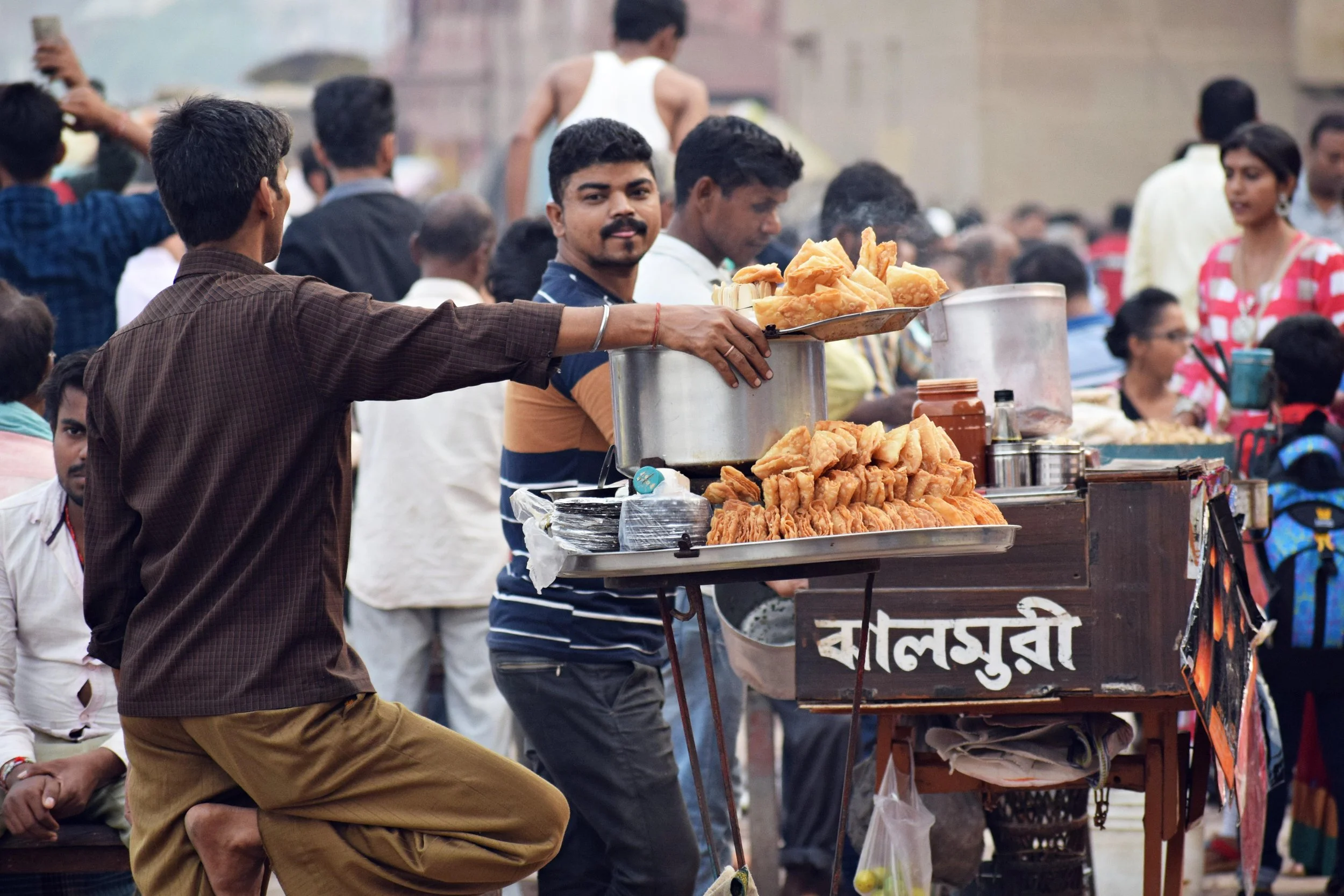
Initially, the refugees were met with some resistance as they began settling in Delhi. They were outsiders and the uncomfortable memory of Partition-fuelled riots lingered. The city had seen too much blood and displacement. Delhi was a political hotbed, and it was in this unstable climate that they started enterprising. Many who had made the journey on foot, with no papers, decided to make a home out of nothing. It was in such makeshift tents and thatched shelters that Delhi began to grow differently.
The food that changed the city wasn’t merely invented; it came from adaptations under constraints. There is no ‘authenticity’, when it comes to Delhi’s food. It is not about who invented dal makhani first, or how Anglo-Indian delicacies were swapped with indiscriminate kebabs. Here, history rests with the forgotten chai wallah. The refugee daughter-in-law making biryani with whatever she has. The halwai who sold Karachi halwa in tin boxes.
One such restaurant was born in Connaught Place: Kwality Restaurant. Opened in 1940 by P.L. Lamba, a refugee from Lahore who arrived with little more than a hand-cranked ice cream machine, its menu archived the city’s divided self. On one hand were the continental classics. British crowd favourites included chicken à la Kyiv and fish portuguesa, all reminiscent of British club food. On the other hand, chhole bhature and tandoor dishes were Punjabi staples carried across the border. Food historian Pushpesh Pant writes that Kwality ‘bravely bridged the divide between social classes and the conflicting claims of continental and desi cuisines’. The menu was a living document of a city oscillating between its colonial past and a newly acquired national identity.
Histories of rupture were remade to create community. In pre-partition Punjab, the sanjha chulha, the shared oven around which women gathered to bake bread and feed a community, reappeared in new forms within refugee settlements. Labour was reshaped to rebuild a home in exile. What they baked was met with initial resistance, uncertainty and was dismissed as too coarse.
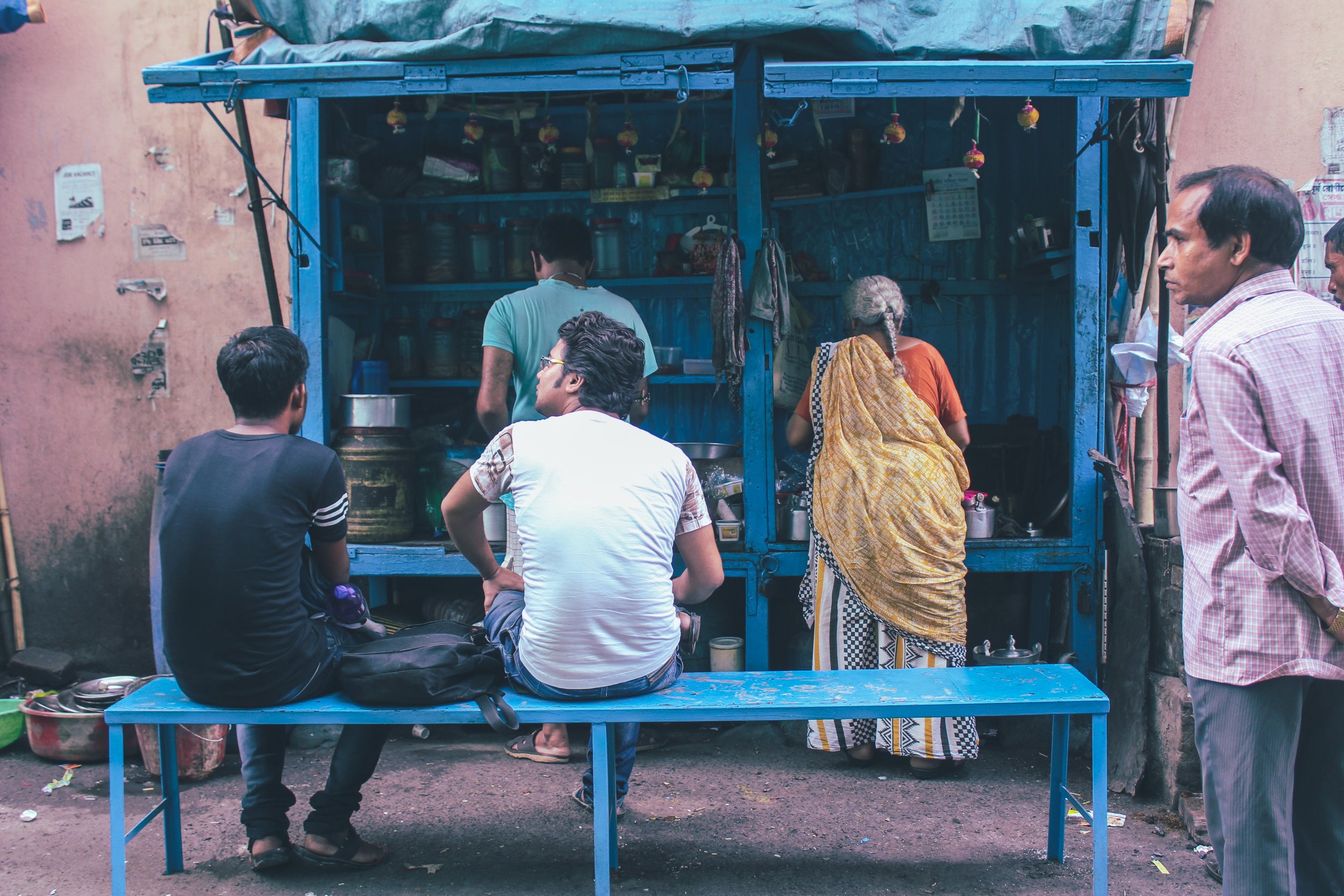
Elsewhere, in Daryaganj, Kundan Lal Gujral, a refugee from Peshawar, opened Moti Mahal in 1947, at the height of communal tension. Much of the roof of the building had collapsed because of violent rioting that lasted weeks.
Gujral began selling tandoori chicken and naan in the style of old Peshawar eateries, and Delhi, supremely, took to it. Politicians, students and the newly emerging middle class began to eat side by side. Butter chicken, a hybrid between leftover tikkas and rich tomato gravy that was originally invented to avoid food waste, became the face of Indian curry worldwide.
However, the sub-continent is not unique in this. Across histories of war, displacement and racialised violence, culinary practices have functioned as sites of remembrance. They have repeatedly absorbed the shock of political rupture.
During Japanese colonial rule, Korea emerged as Japan’s bread basket, transforming into an agricultural colony. Korea began supplying about 98% of Japan’s rice imports. While Japan was able to revolutionise rice production in Korea to meet its own war-fuelled needs, they were unable to feed the colony itself. This was not simply scarcity, but structured deprivation under colonial rule. Korean farmers had little to no access to the rice they grew.
As scarcity intensified, white rice was used in place of cash to mark anniversaries and birthdays. What was once a staple on the poor man’s plate became a gift packed into little red envelopes for gifting. Rice became a currency.
The Second World War was almost immediately followed by the Korean War, which worsened Korea’s rice shortage. Koreans turned to alternative grains like barley, millet, red beans and black beans. As white rice became a luxury, multi-grain rice was a quiet rebellion against foreign occupation and the loss of sovereignty. Koreans reinvented new ways of survival, clinging to tradition one grain of rice at a time.
Similar patterns emerged closer to home. The Sri Lankan Civil War changed lived realities for Tamils across the region. As surveillance and military blockades became a way of life, Sri Lankan Tamils turned to sustenance in its most reduced form, kanji, a simple rice porridge. Sri Lankan Tamils, who banked on seafood, suddenly found themselves cut off from it. Kanji became a desperate source of sustenance. The rice dish, though modest in form, fed refugees in encampments, those in bunkers and those on the move.
The rice porridge dunked in salt water would be stretched for days by Tamils who had become refugees in their own home. Sri Lankan Tamils call it a symbol of survival. A quick dish to take on the move as shelling from both sides started. Boiled rice, salt and water is more than just tradition; it is remembrance.
If these histories reveal a broader pattern, Delhi continues to live it in the present. Nearly eight decades after Partition, in the bustling markets of Jangpura, a small restaurant tries to bridge the gap between their lost homeland and the cost of livelihood in the national capital. Pakeeza restaurant, run by Ghufran Sabri, reinvents traditional Afghan cuisine one khameeri roti at a time. Ghufran, like many Afghans, spent his childhood in uncertainty and violence. He came to Delhi in the years following the Soviet invasion. Today he mans a busy counter, greeting customers in his native Pashto as early as 9 am. Ghufran has barely taken the mantu (meat dumplings) off the steamer before his son rings in the first order of the day. Pakeeza restaurant is famed for its kabuli pulao and chainaky, sheep meat cooked in Afghan spices and topped with chickpeas. Afghan spices and topped with chickpeas. Indians accustomed to relatively spicier Mughlai flavours often find Afghan food to be a revelation, because despite its subtle spices, it is just as robust. Yet the taste that lingers isn’t the cumin or the cardamom; it is in the community that gathers around them.
What keeps Pakeeza in business are other Afghans who had fled home under similar circumstances, who had found themselves stranded on the wrong side of the border. Yet the food persists. The Afghan naanwai still bakes bread before dawn, for customers who do not speak his language, in a country with no formal refugee law, with no path to formal citizenship, only the precarious permission to stay.
In a city so often torn apart by invasion and occupation, history is afoot in the form of the city’s culinary traditions. It is not a rupture; it is continuity. The logic of displacement is not confined to just borders, but also to the plate. Across history, food has been used to resist, registering what official archives omit. From refugees of Partition to refugees from Afghanistan creating Little Kabul in Jangpura, the city has sustained history through food. This echoes how a community once displaced endures through political instability and loss. The city has sustained its history through food and through its kitchens.
By Akansha Sengupta
References:
Pandey, Gyanendra. Remembering Partition: Violence, Nationalism and History in India. Cambridge: Cambridge University Press, 2001.
Pant, Pushpesh. India: The Cookbook. London: Phaidon, 2010
Kaur, Ravinder. Since 1947: Partition Narratives among the Punjabi Migrants of Delhi. New Delhi: Oxford University Press, 2007.
Cumings, Bruce. Korea’s Place in the Sun: A Modern History. New York: W. W. Norton, 2005.
Kim, Choong Soon. “Rice and the Korean Experience.” International Journal of Korean Studies 21, no. 1 (2017): 119-139.
Parameswaran, Aanya. “Sri Lankan Kanji’s Rich History as a Symbolic Tamil Dish.” Tasting Table, January 11, 2024. Tasting Table article
Vishal, Anoothi. “Partition Changed India’s Food Cultures Forever.” The Wire, 14 August 2017. https://thewire.in/food/partition-food-punjab-mughlai-bengal
Biswas, Soutik. “Moti Mahal: India Curry Houses Battle Over Butter Chicken.” BBC News, 24 January 2024. https://www.bbc.com/news/world-asia-india-68053470
Author observations from visits to Pakeeza Restaurant, Jangpura, Delhi.