
Remembering Partition Launch in London
Memories, Communities and Complexities
Remembering Partition in London: Memories, Communities and Complexities
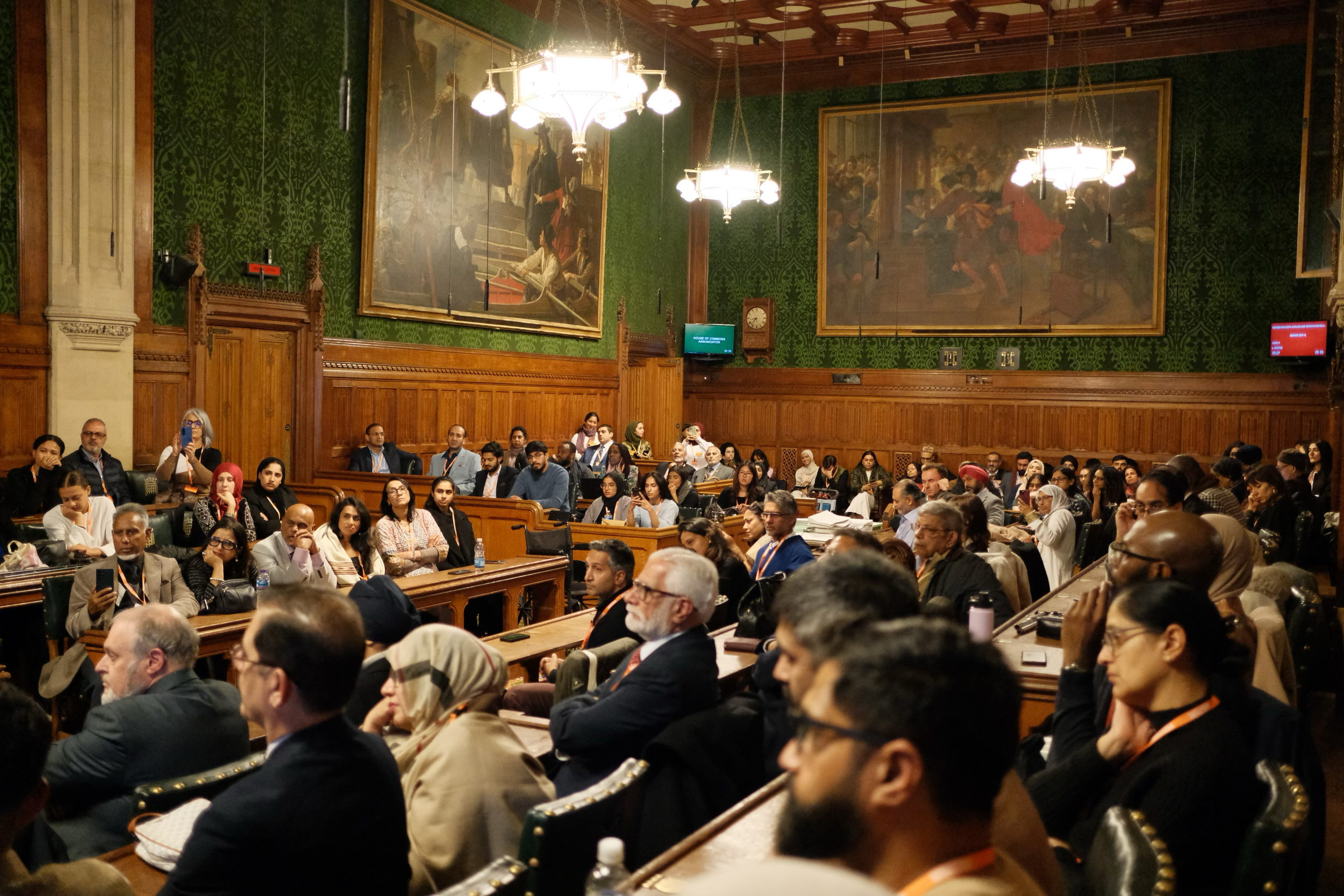
At the launch of the Partition Memorial Trust at Parliament in October 2025.
The launch of the Partition Memorial Trust’s ambitions for a major memorial in London, held in Parliament in October last year, was marked not by triumphalism but by something more fragile and necessary: quiet recognition. Recognition of lives, identities and experiences fractured by colonial decision-making. Recognition of memories carried for generations without a formal place to land. And recognition that remembrance, when done carefully, can still offer the possibility of grounding and growing the iterative repair and reconfigurations of communal and individual experiences.
For me, the moment carried personal and professional weight. I have followed this project from its early emergence as a community-led initiative, one that, as so many do, struggled to be legible within existing frameworks of public art and heritage funding, through to its presence within the symbolic heart of British democracy. To witness that journey is to see not only a memorial come into being, but a methodology to develop one unfold: one that asks Britain to sit more honestly with its colonial past and asks the cultural sector to rethink how remembrance is commissioned, governed, and sustained.
Partition and Britain’s Unfinished Reckoning
The Partition of British India in 1947 remains one of the largest mass displacements in modern history, resulting in the deaths of millions of people and the migration of over fourteen million across newly drawn borders between India and Pakistan, with long-term consequences for what would later become Bangladesh.¹ Yet despite its scale, Partition has occupied an ambivalent place in Britain’s public memory. It is often acknowledged only obliquely, folded into narratives of “decolonisation” or “the end of empire,” without sustained engagement with the human cost of imperial governance.
Scholars of postcolonial memory have long argued that Britain’s selective amnesia around empire is not accidental but structural: a condition of maintaining a coherent national story that privileges continuity over rupture.² In this context, the Partition Memorial operates not simply as an object of remembrance, but as a challenge to the pedagogical limits of British public history. It insists that empire is not an abstract past, but a lived inheritance, particularly for diasporic communities whose presence in Britain is itself a consequence of the entanglements of the British Empire.
From Community Memory to Civic Space
What distinguishes this campaign for a memorial to Partition in London is not only what it remembers, but how it has come into being. This is not a top-down act of state commemoration, nor a monumental gesture imposed upon communities. Instead, it has grown from survivor testimony, intergenerational storytelling, and grassroots organising, often undertaken by those whose experiences were themselves marginal to official heritage narratives
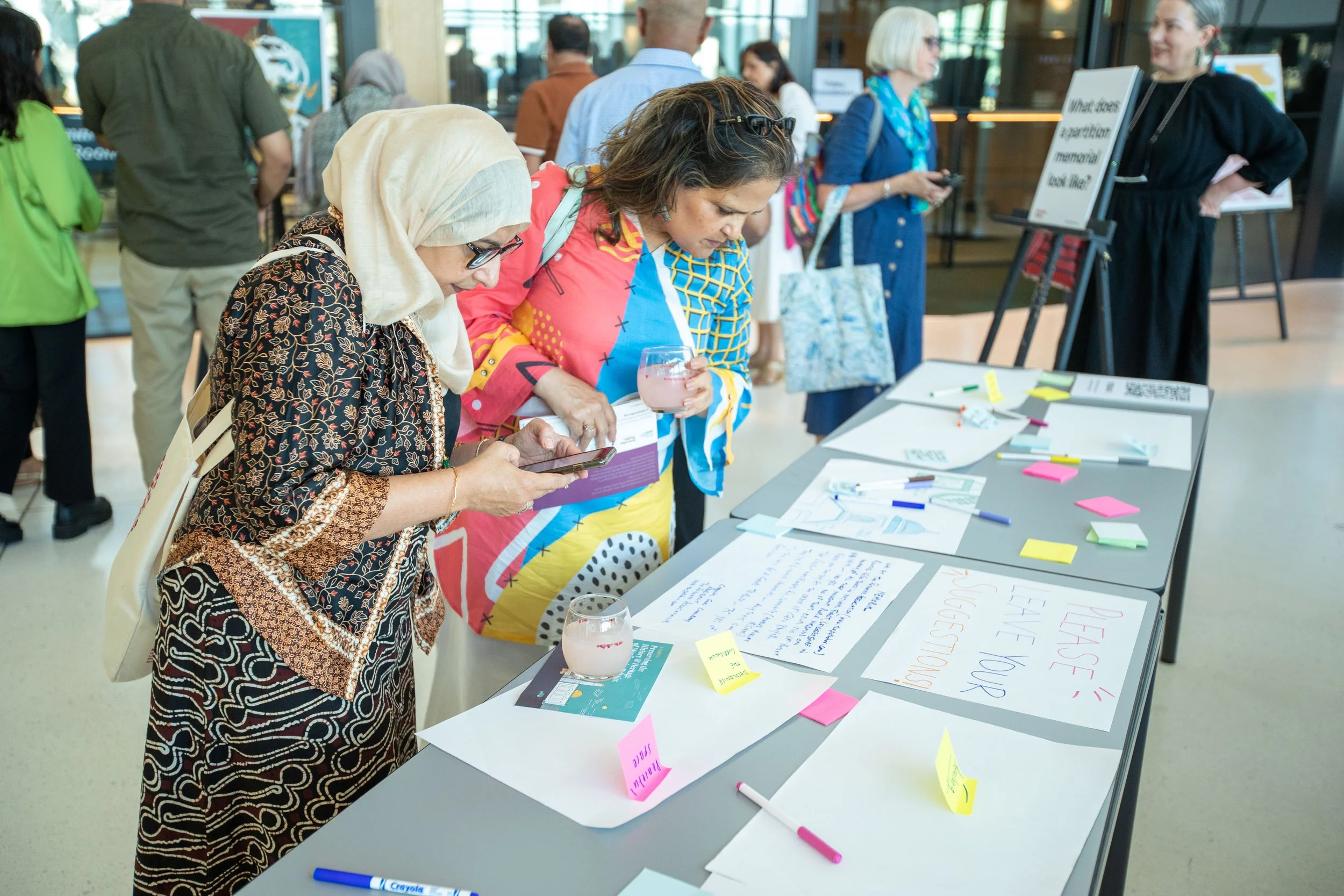
Sharing ideas for a new memorial to commemorate the communities affected by Partition.
Community-led memorialisation has increasingly been recognised as a critical corrective to traditional public art commissioning, which has historically privileged elite authorship, aesthetic permanence, and national consensus.³ Projects such as this align with a broader shift in memory studies towards what Michael Rothberg terms multidirectional memory: forms of remembrance that acknowledge overlapping histories of violence, migration, and belonging rather than competing hierarchies of suffering.⁴
What has been particularly striking in this case is the project’s ability to retain its ethical grounding as it moves through institutional spaces, local authorities, London’s City Hall, and now Parliament, without losing the voices of survivors and their descendants. This is no small achievement. As Laurajane Smith has argued, heritage processes often neutralise difficult histories precisely at the point of institutional recognition.⁵ This memorial initiative resists this flattening by keeping testimony, plurality, and faith traditions central to its public life.
Public Art as Process, Not Just Product
The memorial also expands our understanding of public art itself. Rather than treating the artwork as the culmination of engagement, the project foregrounds process: dialogue, listening, and relational care. In this sense, the memorial functions less as a static monument and more as an ongoing civic practice. Its multi-faith and intergenerational dimensions reflect the lived realities of Partition’s afterlives in Britain, particularly in cities such as London, where South Asian diasporas have shaped social, cultural, and religious life for decades. The memorial does not resolve historical trauma, but it offers a shared language through which grief, faith, and memory can coexist in public.
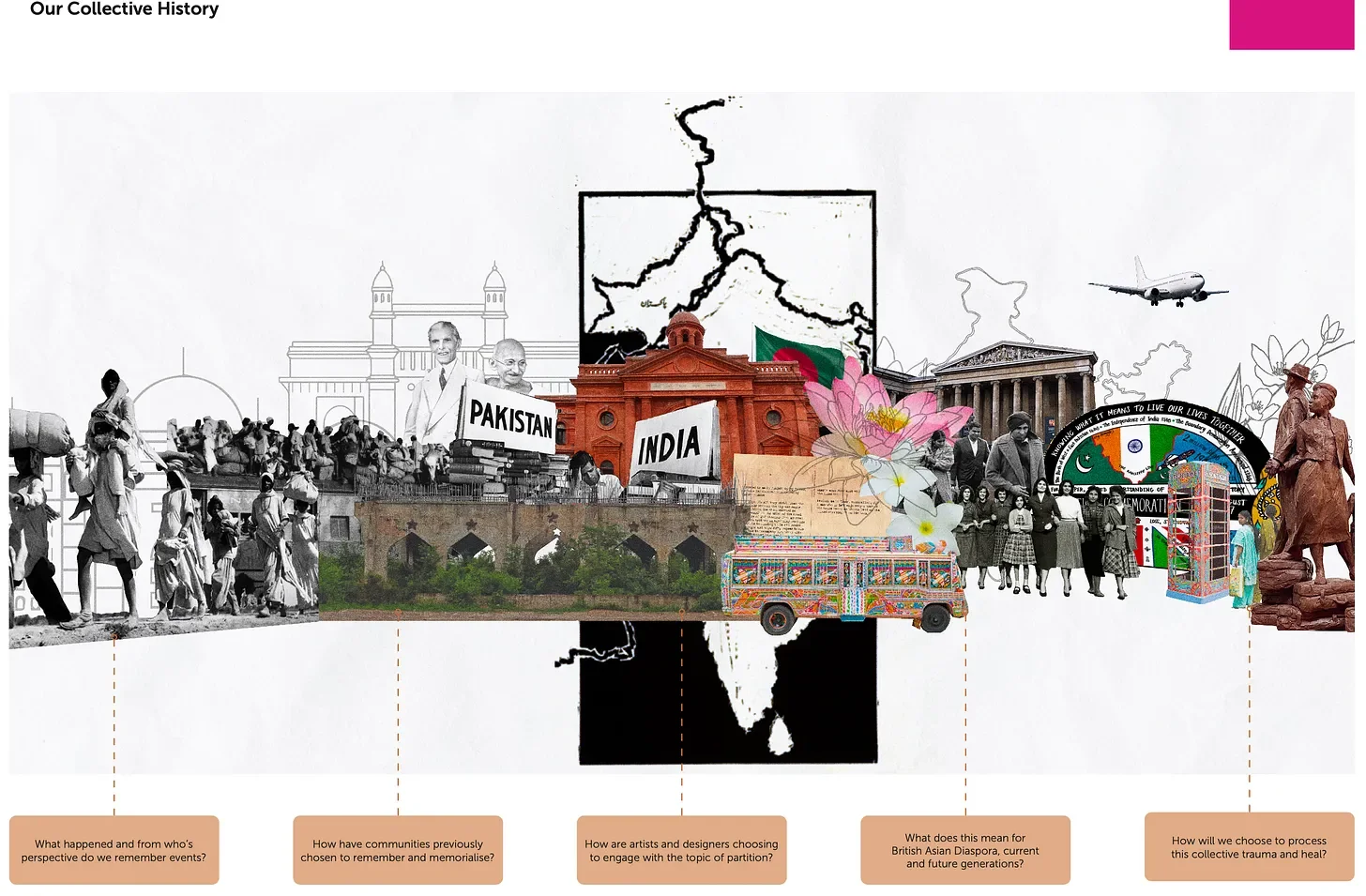
Taking Funders and Institutions on the Journey
What is sometimes less visible,but equally important, is the journey this kind of project demands of funders, commissioners, and cultural professionals. Community-led memorials do not fit easily within conventional funding logics that prioritise clear outcomes, fixed timelines, and aesthetic certainty. They require patience, trust, and a willingness to cede control.
In this sense, this Partition memorial initiative is also an action research space for the cultural sector itself. It has asked public bodies and funders to stretch their definitions of value: to recognise emotional labour, intergenerational care, and the slow work of consensus,building as legitimate forms of cultural production. As Claire Bishop and others have noted, this shift challenges entrenched hierarchies of expertise within the arts, redistributing authority toward those with lived experience.⁷
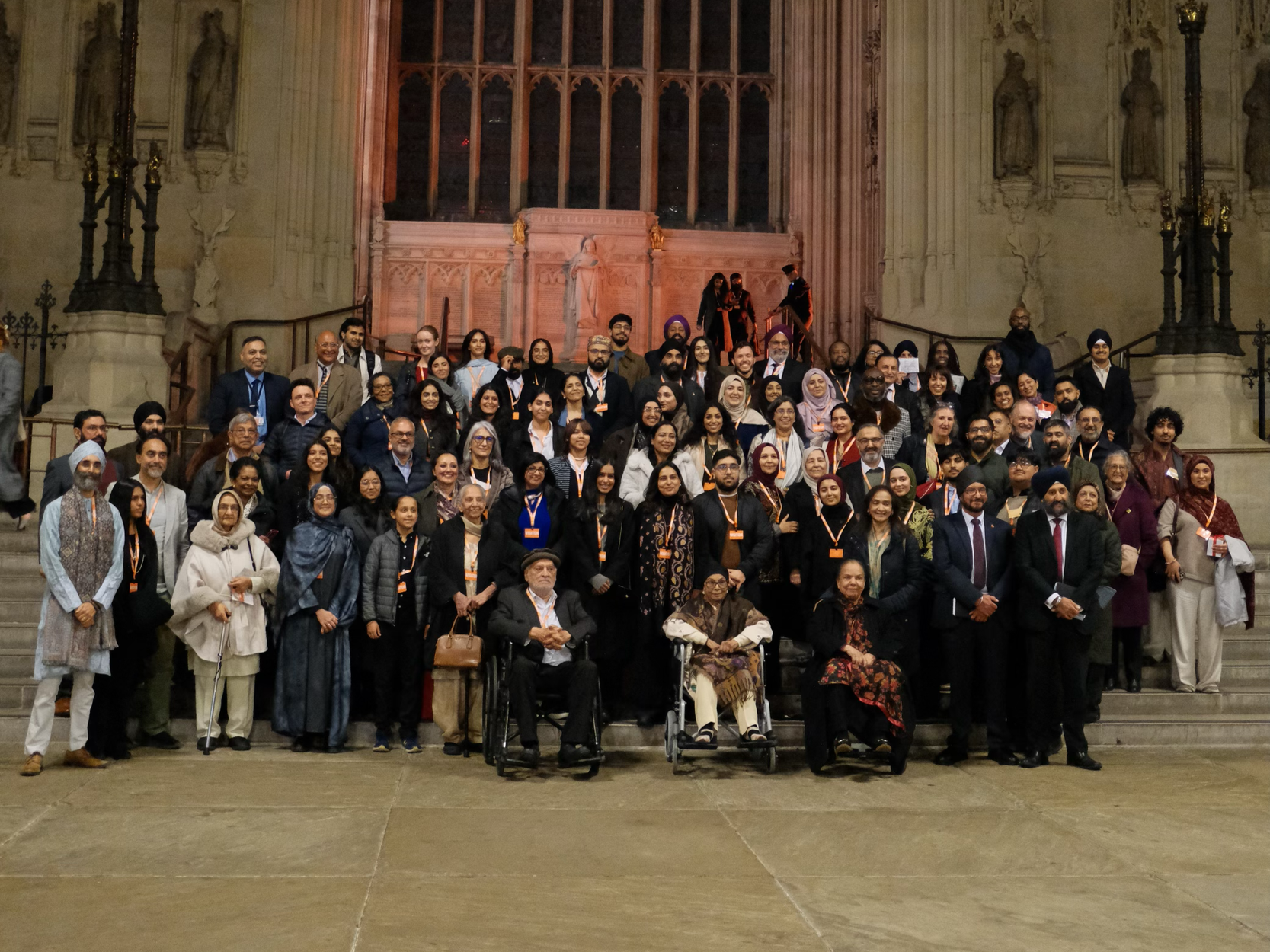
Sharing a moment of unity at the launch of Parliament Memorial Trust in October 2025.
From my own experience supporting early stages of this work within public funding contexts, I have seen how transformative this can be—not only for communities, but for institutions learning how to hold complexity without instrumentalising it. Breaking the mould of public memorialisation is not only an artistic risk; it is an institutional one. And it is precisely this shared risk that allows new forms of public memory to emerge.
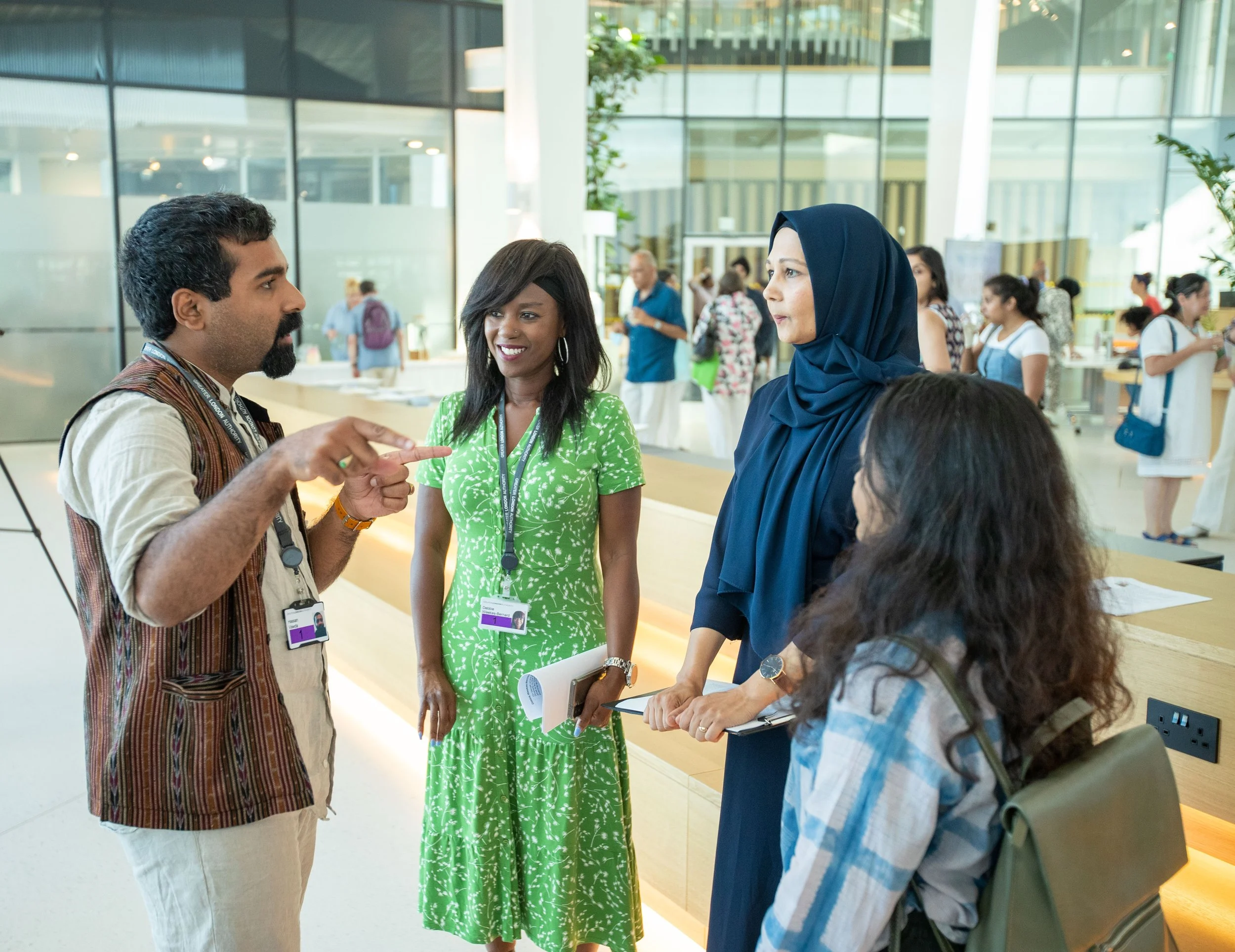
Remembering Partition event at City Hall 2023.
Britain, Belonging, and the Work Ahead
The presence of this memorial campaign in Parliament does not signal an achievement that stops. Rather, it raises further questions about whose histories are afforded space, and under what conditions. In a moment when debates around migration, national identity, and belonging remain highly charged, the memorial offers a counterpoint to exclusionary narratives. It reminds us that Britain’s multicultural present is inseparable from its imperial past, and that remembrance is a civic responsibility, not a concession.
For British Muslims, Sikhs, Hindus, and many others whose intersectional family histories are shaped by Partition, the memorial also reflects the diversity within these communities themselves. There is no singular Partition story, just as there is no singular way of being British today. Increasingly, communities are defining what remembrance looks like on their own terms, iterative, plural, and rooted in both faith and critique.
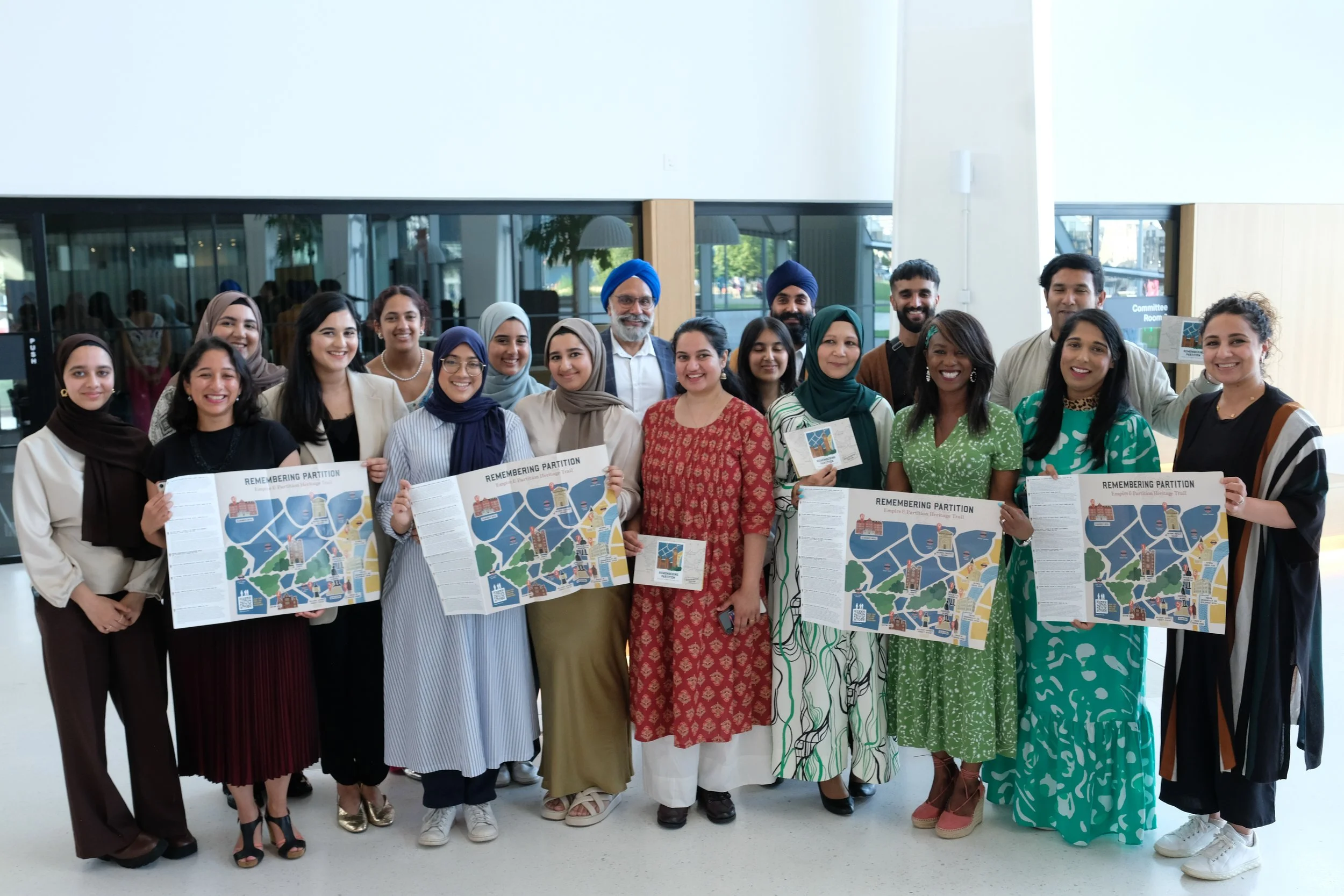
City Hall, Remembering Partition 2023. Launch of Empire and Partition Heritage Trail
This campaign for a memorial on Partition in London stands as a powerful example of what public art can do when it is grounded in community memory and supported rather than subsumed by institutions. It challenges Britain to confront the ethical legacies of empire and challenges the cultural sector to rethink how remembrance is commissioned, funded, and sustained.
For me, it is also a reminder that the most meaningful public artworks are rarely only about the past. They are about the conditions we create for listening in the present and the futures we make possible when we choose to remember together.
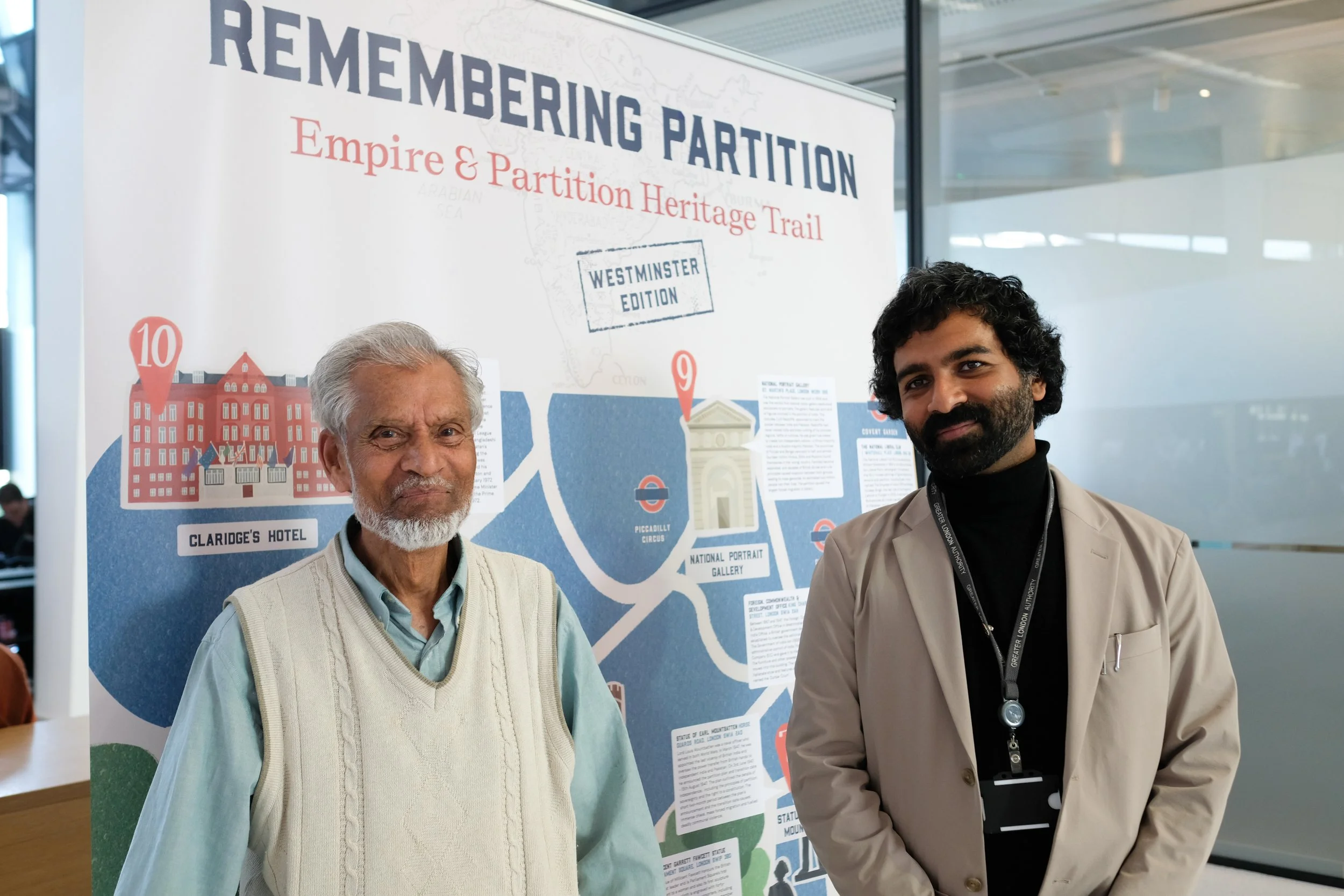
Hassan Vawda - Relationship Manager, Arts Council England/ Doctoral Researcher, Goldsmiths & Tate
References
Talbot, I. & Singh, G. (2009). The Partition of India. Cambridge University Press.
Gilroy, P. (2004). After Empire: Melancholia or Convivial Culture? Routledge.
Miles, M. (2017). Limits to Culture: Urban Regeneration vs. Dissident Art. Pluto Press.
Rothberg, M. (2009). Multidirectional Memory. Stanford University Press.
Smith, L. (2006). Uses of Heritage. Routledge.
Bishop, C. (2012). Artificial Hells: Participatory Art and the Politics of Spectatorship. Verso.