
Feminist Readings of the Partition: The Other Side of Silence
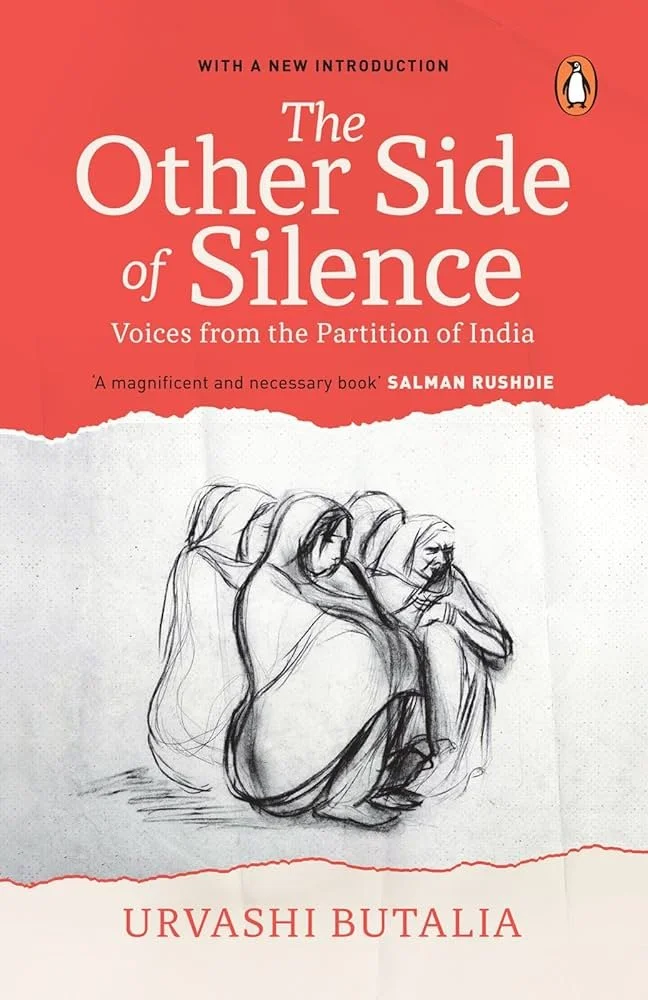
Thinking about Partition often brings to mind large convoys of displaced refugees migrating across borders, or violence and mass frenzy taking over towns and villages. With death tolls estimated between 200,000 to 1 million and more than 10,000 women abducted from both sides of the border, the 1947 Partition was one of the largest and most traumatic mass displacements in human history. Much of Partition scholarship has long focused on key political moments such as the drawing of the Radcliffe line and its announcement on 17 August 1947, or the Partition Plan announced on 3 June 1947, as well as the political negotiations leading up to the Partition. Urvashi Butalia’s The Other Side of Silence asks us to pause and look beyond these statistics, urging us to listen to voices excluded from mainstream Partition narratives. It involves reimagining Partition through the act of listening: to memories, silences, and longing among those who continued to live through Partition for decades after.
Urvashi Butalia is a feminist researcher and publisher who co-founded India's first feminist publishing houses, Kali for Women (1984) and Zubaan (2003). Her book The Other Side of Silence is an award-winning feminist work on 1947 Partition of India which uses a combination of personal interviews, official letters and state documents, and provides an intimate yet comprehensive account of women’s experiences during Partition. While Butalia largely focuses on testimonies from Punjabi communities, she contends that the work allows for a more reflexive and nuanced reading of women’s histories across various regions of India.
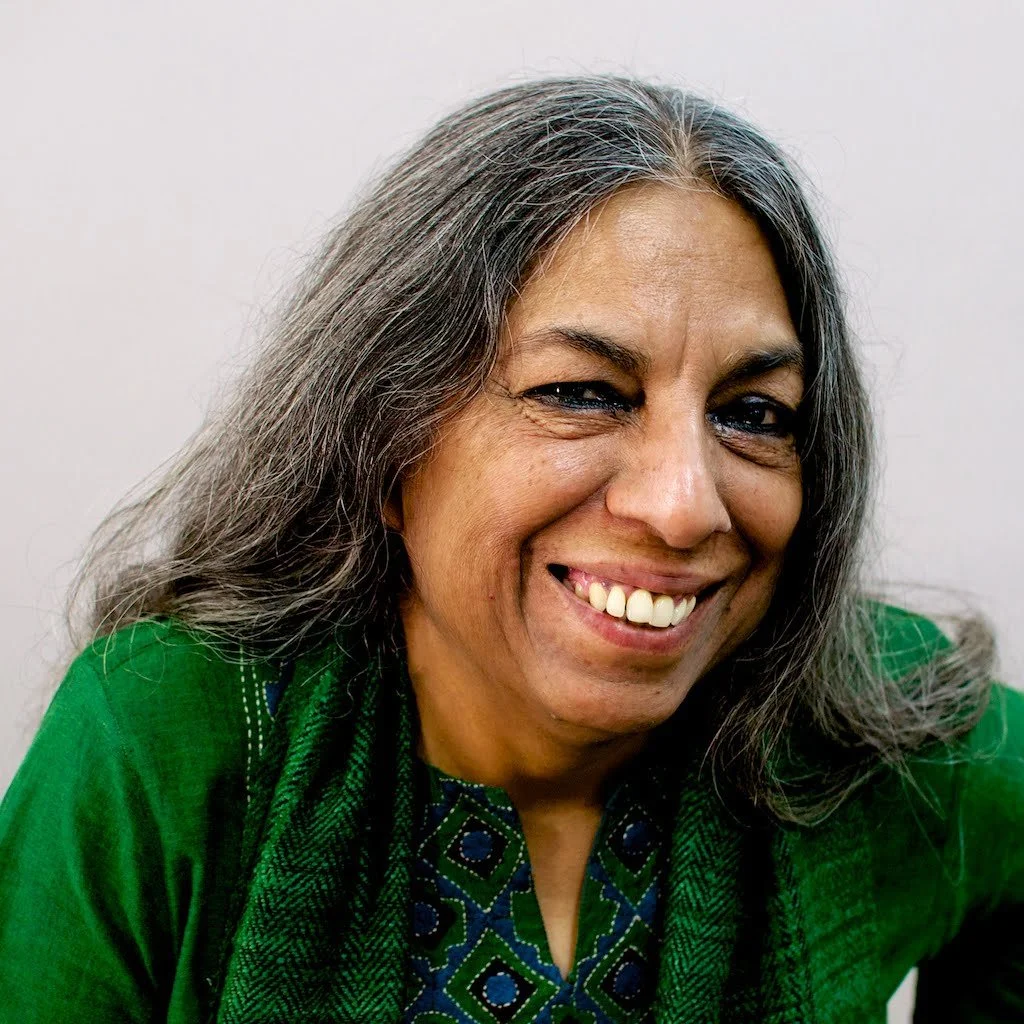
Author: Urvashi Butalia
Despite the scale of gendered violence during Partition, women have often remained peripheral in its historiography, eclipsed by political narratives. Moving away from conventional histories of the immediate violence and destruction, Butalia reveals the continuing legacies of loss, loneliness and longing for one’s roots and home. Treating each account with care and compassion, her narrative adds human depth to the statistics of violence, where individual lives had to bear the brunt of post-Partition chaos. The book is largely devoted to stories of women, children and Dalits¹ whose voices had been marginalised in nationalist Partition scholarship. Through stories of abduction, sexual violence, conversion and rehabilitation, and incidents such as mass suicide at Thoa Khalsa, the book aims to reveal how deeply gendered the experience of displacement was. For most women, silence was not just coerced by marginalising their experiences from history textbooks, but also through family pressures and fear of confrontation.
From a feminist perspective this book can be interpreted as revolving around the notion of ‘honour’, where women’s bodies became tied to community and nationalism with little regard to their own agency. Butalia shows that in order to preserve their pride, families sometimes killed their own daughters and sisters in order to protect them from members of the other community. Through conversations with Bir Bahadur Singh, for instance, we get to know how women were symbolically positioned as bearers of community honour, in this case, Singh’s father killing his own daughter to protect her from abduction or conversion. Moreover, through oral accounts of women rehabilitation volunteers, we learn about the struggles of recovered abducted women. Some accounts include how women were refused entry into their homes as they were believed to have already been defiled by members of the other community. Ultimately, the trauma of abduction, violence and loss of identity constrained any agency women had over their own bodies and life choices, revealing a constant tension between state protection, patriarchy and women’s individualism.
Butalia also sheds light on the equally traumatic experiences of children who witnessed Partition’s violence and bloodshed only to be scarred for life. A lot of these children grew up without a fixed identity, some abandoned by their mothers, some orphaned during violence and displacement, and some separated from their families through recovery policies that assigned national identities to their mothers. Such stories reveal how Partition was much more than a geographical division, it was also a division of homes and families.
Dalits occupied an ambiguous space during communal conflict, as their social identity did not fit neatly into nationalist Partition narratives of suffering, martyrdom and female honour. Butalia notes that oftentimes Dalit members faced material losses along with having to clear bodies and spaces after riots ended. They did not own businesses or properties and occupied low social status that excluded them from mainstream nationalist histories about loss of property and honour. Butalia renders them visible by showing how many Dalit women faced more violence because of their gender and caste identity, arguing that it was not just religion and nationalism but also gender and caste hierarchies that shaped Partition violence.
By delving into intimate spaces of domestic memory, The Other Side of Silence ultimately encourages us to reflect on the ongoing afterlives of Partition, an unfinished story that still endures in unspoken memories and nostalgic discussions within families. Butalia recognises the limits of her work which is more personally and emotionally motivated and is less historical in nature. The body of her research focuses on women from Hindu and Sikh communities within Punjab. Experiences from other regions like Bengal and Kashmir are absent from the book, which, she argues, calls for a more detailed analysis of these regional histories during 1947.
Despite these limitations, The Other Side of Silence offers a groundbreaking intersectional and feminist study of the Partition, highlighting the ways in which gender shaped the violence experienced by women. The book also offers crucial insights into how women not only suffered long-lasting impacts of violence, but also resisted and built their lives upon rehabilitation and recovery. It is foundational for understanding women’s agency during 1947 and an essential read for those studying memory, oral history, gender and social history of South Asia.
“Dalit” refers to historically marginalised caste communities in South Asia who were placed outside the traditional caste hierarchy and subjected to untouchability. The term, meaning ‘oppressed’ or ‘broken,’ has been adopted as a self-identity marker that challenges caste-based discrimination and rejects notions of inherent inferiority tied to birth or fate. (Source: Dalit Solidarity Network UK)