
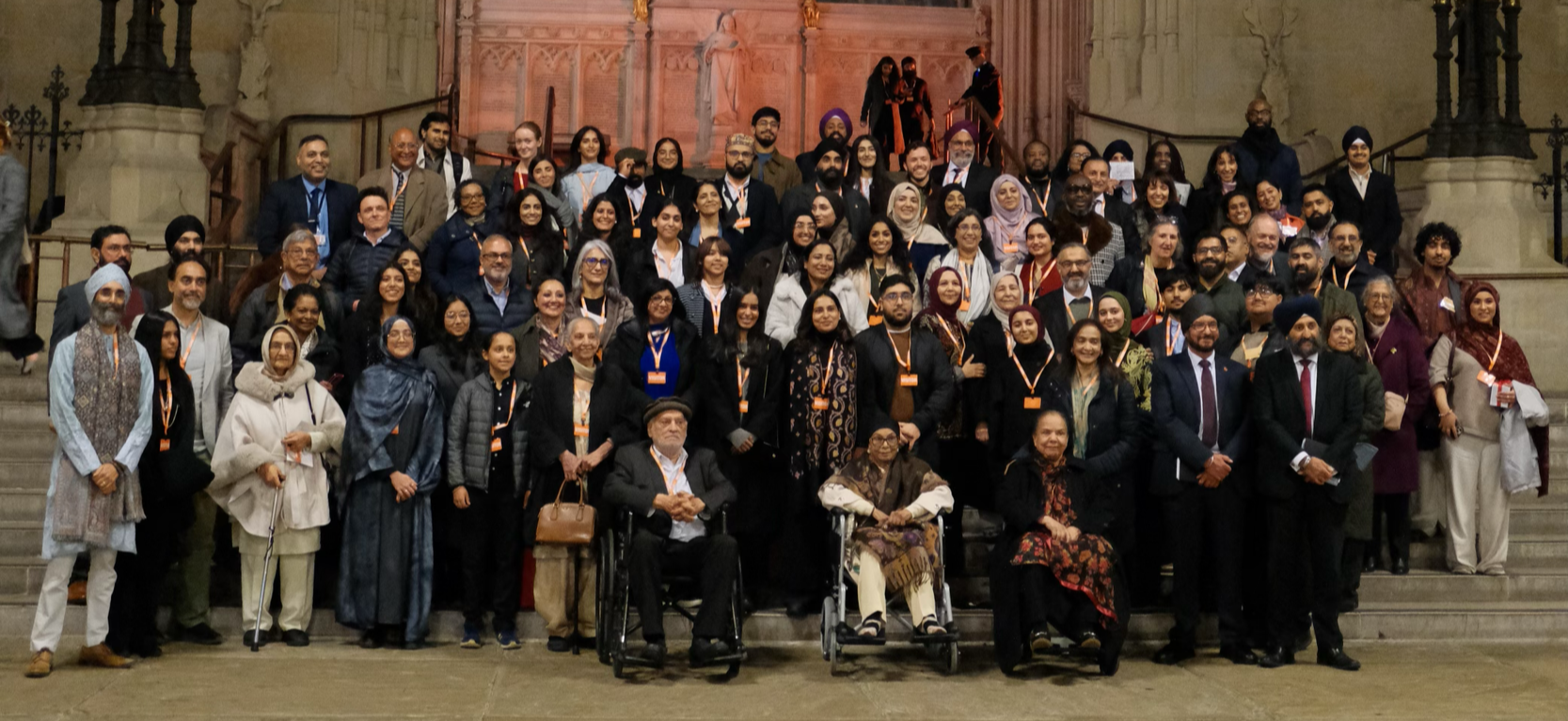
Support a National Partition Memorial in Central London
We, the undersigned, support the creation of a permanent National Partition Memorial in Central London.
The Partition of British India in 1947 was one of the most pivotal and traumatic events of the twentieth century. It brought independence to India, Pakistan and East Pakistan - which later led to an independent Bangladesh. Partition resulted in the displacement of an estimated 15 million people and between 1 and 2 million people were killed or died. Families were separated, communities uprooted, and the effects of this violence continue to shape lives today. Partition is recognised as the largest mass displacement in human history.
In 2027, the world will mark the 80th anniversary of Partition. Yet there is still no national memorial in the heart of London to acknowledge this defining moment and its human consequences.
This absence is striking. London was at the centre of the British Empire and of the political decisions that brought British rule in India to an end. It is therefore entirely appropriate that the capital should contain a permanent place where the experiences of those affected by Partition can be remembered, understood and honoured.
The Partition Memorial Trust is working to ensure that this history is recognised at a national level and that a permanent memorial is established in Central London. The Trust brings together historians, academics, community leaders and parliamentarians, and is leading the effort to create a dedicated place of remembrance, education and reflection for all those affected by Partition and for future generations.
A National Partition Memorial would:
Remember the victims of violence, displacement and loss;
Honour the millions who were forced to leave their homes and rebuild their lives;
Recognise the resilience and contribution of the generations who followed;
Provide an educational resource for future generations to understand this pivotal period in British, South Asian and global history; andCreate a place for reflection and reconciliation, bringing together people of different backgrounds and communities.
This is not a memorial to division. It is a memorial to the people who endured it, and to the generations shaped by its legacy.
Partition remains deeply embedded in the family histories of millions of British citizens and residents. For many families of Indian, Pakistani and Bangladeshi heritage, memories of Partition have been passed from one generation to the next. At the same time, Partition is part of Britain’s own history and deserves to be better understood by the whole nation.
A memorial in London would send a powerful message: that the lives, suffering and resilience of those affected by Partition are part of the story we choose to remember as a country.
Names listed in alphabetical order by first name
Names in bold are Partition survivors.
Names in italics are direct descendants of Partition survivors
Dr Aditi Kumar, Art historian, curator, and cultural practitioner
Ajit Mahajan, East African senior citizen association former chairman
Dr Amar Sohal, King's College London
Ambreen Nawaz
Professor Amina Yaqin, University of Exeter
Amrit Bahia
Andrew Kelly
Anindya Raychaudhuri
Anjuman Nawaz
Ann Girling
Anne Murphy, University of British Columbia
Anum Qaisar, Former MP
Apsana Begum MP, MP for Poplar and Limehouse
Arifa Nasim
Arjan Rai
Aruna Mahananda, University of Essex
Arvind Kumar, University of London
Asim Mughal
Avishek Ray, NIT Silchar
Bal Singh
Professor Balbir Barn, Middlesex University
Bhupinder Singh Bhasin, The Pothohar Association UK
Bimmy Rai MBE FRSA
Binita Kane, South Asian Heritage Trust
Bubbles Nayyar
Bushra Nasir CBE DL, Equi, Muslim Think Tank
Charles Vincent
Chetna Kapacee, Strategic Creative Cultural Leader
Chayanika Bhaduri
Dr Chris Moffat, Queen Mary University of London
Christopher Downie, Ramadan Space
Dan Haines, University College London
Danial Pratt
Darius Daver
Darius Rayman
Darshan Kaur
Davina Sohal
Debjani Sengupta, IP College, Delhi University
Derek Kirton
Dilshad Surelia, Asian Resource Centre
Dylan Mirchandani
Ella Sawhney
Eve Tignol
Faizan Moquim
Farhana Salama
Fazaan Mughal
Firyal Lamees Hafeez
Fizzah Jasrai
Mr Ghulam Haider
Gopaljeet Bhachu, Harrow Interfaith
Gulshan Pannu
Gurcharan Virdee
Gurmeet Kler
Guneet Kaur Rekhi, Siri Guru Singh Sabha (Croydon) and Pothohar Association (UK)
Mrs Gurdeep Kaur Chadha,Pothohar Association
Gurmeet Sian, Office Sian Architecture & Design
H Babli Bharara, The World Sikh Foundation
Habib Patel
Mrs Harjit Kaur Ahluwalia
Harmeet Shah Singh
Harvinder Kaur Bhasin
Hasan Patel
Hassan Mahamdallie, Muslim Institute
Hassan Vawda, Goldsmiths, University of London
Hannah Machover, Stories in Transit
Harsharn Mehta
Professor Humayun Ansari, Royal Holloway, University of London
Humera Khan, An-Nisa Society
Professor Ian Talbot, University of Southampton
Iffat Nisar
Ima Miah, Asian Resource Centre of Croydon
Inderjeet Bhatia
Lord Indarjit Singh, Network of Sikh Organisations UK
Irfan Ahmed
Ms Ishrat Bano Dilkusha Zuberi
J Choudhury
Professor J. Lally, UCL
Jamshed Mughal
Janice Cheddie
Jaspreet Oberai
Jasprit Singh, A little History of the Sikhs
Jasvir Singh CBE, South Asian Heritage Trust
Julie Siddiqi
Kanika Roy
Kaniz Ali, Maison Nur UK
Kanwaljit Kaur Singh, Global Sikh Council
Karoline Cook, Royal Holloway, University of London
Professor Kate Cooper, Royal Holloway, University of London
Khalida Khan, An-Nisa Society
Khalid Zuberi
Khizra Ahmed
Khuzaymah Pathan
Kie Dass
Lord Kulveer Ranger
Laks Mann, South Asian Heritage Trust
Dr Layli Uddin, Senior Lecturer, Queen Mary University of London
Lubna Ferdowsi
Lubana Jasrai
Lucky Roy
Manjit Shihn
Malvika Bhatia, The Citizens' Archive of India
Manasi Pophale, History Speak CIC
Mandip Singh, Gurdwara Aid
Baroness Manzila Uddin
Mara Ahmed
Markus Daechsel, Royal Holloway, University of London
Martin Spafford, Retired History Teacher
Marya Bangee
Mary Hewitson, Taught Indian and Pakistani heritage children for many years in Berkshire and Peterborough
Mayurika Chakravorty, Carleton University
Mehboob Dada
Mejindarpal Kaur, United Sikhs
Michael Hrebeniak, New School of the Anthropocene
Dr Michelle Johansen
Minee Pratiksha
Mohammad Aasim Mirza
Mohammad Siddiqui
Monica Dowling
Mrinalini Venkateswaran, Historian and curator
Mumtaz Ahmad
Muneer Rashid
Mya Badhan, South Asian Heritage Month (South Asian Heritage Trust)
N Shafi
Nadeem Mughal
Najma Akhtar, singer and songwriter
Cllr Naz Anis-Miah, Scotland’s first councillor of Bangladeshi heritage and a former MP candidate
Naz Shah MP, MP for Bradford West
Naz Zoberi
Nazli Hussain
Neelu Chawla
Neeti Nair, University of Virginia
Neetu Sawhney
Nishat Alam
Noreen Ahmed
Dr. Nur Sobers-Khan, Historian of South Asia
Oliver Sibbald
Dr Omar Shaikh, Colourful Heritage (host videos of Scotlands partition survivors & descendants)
Ömer Faruk Yeni, Ketebe Publishing Ltd
Dr Parvinder Singh Garcha
Dr Priya Atwal, University of Oxford
Priyanka Hutschenreiter
Professor Prarthana Purkayastha, Royal Holloway University of London
Premal Bhatt, South Asian Heritage Trust
Pushpinder Chowdhry, Tongues on Fire CIO
Raam Tarat
Radha Kapuria, Durham University
Radhika Iyer
Raj Unsworth, former chair of the Partition Education Group
Rajasekharam Mallipudi
Raj Mann
Raksha Patel
Ranjana Mazumdar
Ravinder Gujral
Rav Singh, A little History of the Sikhs
Professor Ravinder Barn, Royal Holloway University of London
Ravin Raori, University of the Arts London, PMT Advisory board.
Rebecca Heald
Rehana Khan
Resham Mirza
Rishika Williams, Sindh Arts UK and Rishikathepoet
Robena Raza
Romana Shabbir
Rooful Ali, Emerald Network
Roshan Zia
Rupinder Uppal
Saalim Mirza
Saaraa Sattaur
Saarah Ahmed
Sadiya Ahmed, Everyday Muslim Heritage and Archive Initiative & Founder of Partition Memorial Trust
Saduf Rahbour
Saima Mohsin, Journalist & Presenter, Sky News
Saima Shah
Saira Begum Mir
Mr Sajad Butt
Sakshi Mavi, Independent Researcher/Historian, SOAS Alumna
Sam Dalrymple, Historian and Author
Sameena Ali
Samina Uddin Siddiqui
Samina Siddiqui, Author of Partition stories
Samra Abbass, Journalist
Sana Ikram
Sanaa Shaikh, Native studio
Sandip Kana, History Lecturer | Royal Holloway University of London
Sandy Bansal
Dr Saqib Razzaq, Colourful Heritage (we have interviews of folk that are partition survivors or their descendants)
Sarah Ansari, Emrita Professor, Royal Holloway, University of London
Satbir Gupta
Satjit Singh, Pothohar Association
Satpal Kaur Roth-Sharma
Satveer Singh, Urban Akali
Mrs Shafiqua Y. Akhtar
Shahbaz Shah MBE
Shahed Saleem, University of Westminster
Shaheen Saeed
Baroness Shaista Gohir
Shakera Mohammed
Dr Shalini Grover, London School of Economics
Shalini Sharma, Keele University
Shamym Humdani
Sharmeen Obaid-Chinoy, The Citizens Archive of Pakistan
Shazia Bhatti
Shemailah Syed
Shin Sawhney
Shireen Ali-Khan
Sobia Razzaq
Sophie Derham, South Asian Heritage Trust
Soraya Syed
Stacey Tanton
Sujatha Thalad, South Asian Heritage Trust
Suman Bhuchar, Bhuchar Boulevard
Suman Gujral, Artist & Printmaker
Tarlochan Singh - partition survivor and former Indian MP
Tehmina Janjua
Tejpal Ralmill, A little History of the Sikhs
Tharik Hussain, Author, Historian and Travel Writer
Tribe Arts
Uditi Sen, University of Nottingham
Umar Mughal
Vagisha Bhatia, Story Scholar at The 1947 Partition Archive
Waseem Sohail
Dr William Barylo
Professor William Gould, University of Leeds
Yahya Nurgat
Yana Bernard Banton
Yasmin Khan, University of Oxford
Yusra Supdarowa
Zafar Ansari, former England cricketer
Zaina Kazmi
Zara Kazmi
Zufar Faruqi